
Drainage Services in Auckland
Civil IQ provide reliable drainage solutions for all aspects of civil works
Drainage plays a central role in how a site functions both during construction and into the future. Civil IQ delivers drainage services for land development, subdivisions and civil construction projects across Auckland. Our work integrates stormwater and wastewater systems with earthworks, structures, access and wider civil works so projects can be priced accurately and built with confidence.
Whether the project sits within a new subdivision, a rural block or a development requiring council approvals, our focus remains the same: provide clear information, manage levels effectively and support drainage systems that perform reliably.
Integrated drainage for land development and civil construction
Drainage interacts with almost every aspect of civil works. Catchment areas, levels, retaining walls, driveways, concrete slabs and earthworks all influence how water travels through a site. Civil IQ coordinates drainage with these adjacent elements to help reduce clashes and allow contractors to move forward without delays.
Our team works across private developments and council-related projects, often in greenfield subdivisions or semi-rural environments where both stormwater and wastewater systems need careful integration.
Stormwater systems for new sites and subdivisions
Stormwater design must consider rainfall, impermeable surfaces, gradients and downstream discharge. Civil IQ prepares stormwater layouts that collect, convey and release runoff in line with Auckland planning requirements. Depending on the site, solutions may include pipes, culverts, channels, sumps or open drains.
Our stormwater work often involves:

Pipe routes and level control
Swales or natural channels on rural and lifestyle blocks
Culverts at accessways and crossings
Sumps positioned to manage falls on driveways or platforms
Culverts, overland flow paths and rural drainage
Rural and semi-rural developments often come with unique drainage challenges such as natural waterways, long slope transitions and areas where surface runoff must be controlled without extensive infrastructure. Culverts, fluming, open drains and overland flow paths are common solutions. The following measures help maintain stable ground and support long-term site usability.
Civil IQ’s drainage work can include:
Culvert installation for access roads
Drainage upgrades for lifestyle blocks
Lined channels to protect slopes
Clearing and re-forming natural channels
How we can help with your next drainage project

Chambers, manholes and drainage structures
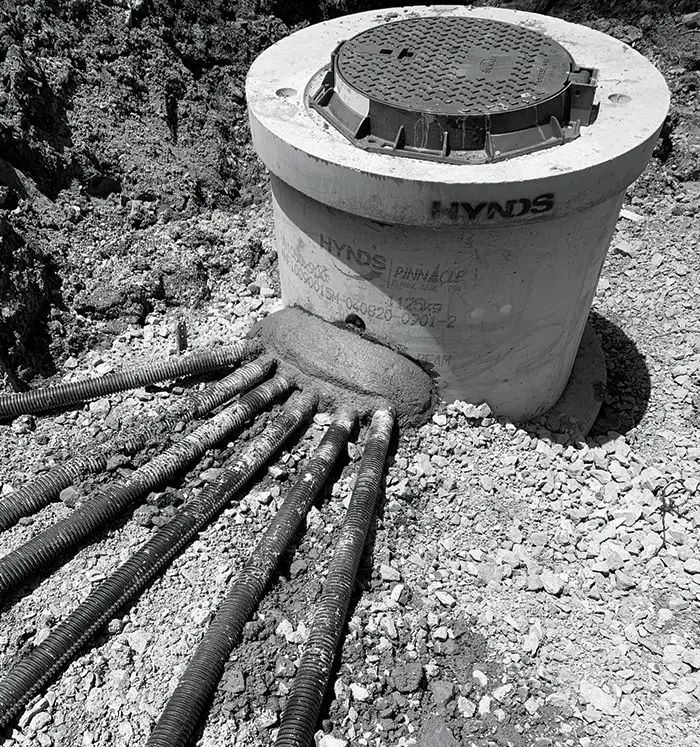
Chambers and manholes provide key access and inspection points within drainage systems. Civil IQ installs precast units, joints and connections in line with design intent. These structures assist with maintenance, flow management and system reliability, and are typically required where pipe sizes change or levels shift.
Construction support and coordination
Civil IQ works alongside developers, builders, architects and other engineers to keep drainage tasks moving smoothly throughout construction. Support may include clarifying falls, access constraints, staging and any interfaces with civil works. Our approach centres on maintaining clear communication so contractors have the information they need to keep progressing.
Drainage for accessways, retaining and concrete works
When drainage interfaces with driveways, retaining walls or slab areas, clarity is vital. Civil IQ provides drainage solutions that reflect:
- Driveway gradients and sump locations
- Back-drainage behind retaining walls
- Subsoil drainage beneath platforms
- Interfaces with concrete slabs and parking areas
These integrated solutions support both structural performance and day-to-day site functionality.
Documentation and council requirements
Drainage designs must be presented clearly to support resource or building consent processes. Civil IQ prepares drawings, levels, long sections and supporting notes that help councils, clients and contractors understand design intent. This documentation aims to reduce queries and make the review process more efficient.
Trenching, pipe installation and level alignment
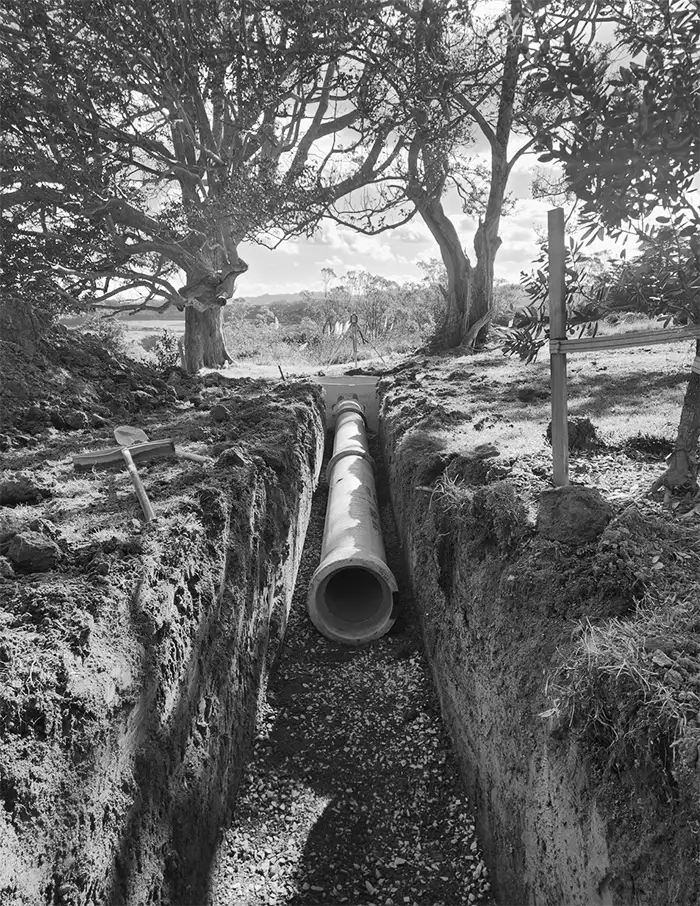
Accurate trenching and level alignment are essential for drainage systems to function properly. Civil IQ undertakes trench excavation, bedding, pipe placement and backfilling for stormwater and wastewater lines. Ensuring correct gradients allows gravity systems to operate as intended and reduces risk of ponding or slow flow.
This work is often connected to earthworks, particularly where new platforms, driveways or retaining structures are being established.
Wastewater and utility coordination
Many projects require new wastewater connections or upgrades to existing systems. Civil IQ coordinates with utility providers and other engineering disciplines to confirm connection points, required depths and any constraints. Documentation is prepared to support consent stages and assist contractors during installation.
Our involvement typically runs alongside stormwater design so both systems can be constructed efficiently and without conflict.
Talk to Civil IQ Engineer about how we can help with your project
If your project involves new drainage, upgrading existing systems or integrating drainage with earthworks and civil works, early involvement helps reduce risk and improve buildability.
Civil IQ Drainage FAQs
When is drainage needed on a project?
Drainage is required whenever new surfaces, building platforms or accessways change how water moves across a site. Earthworks, retaining walls and driveways often impact runoff patterns, so early drainage input helps avoid rework and allows designs to meet council expectations.
What types of drainage are common in subdivisions?
Subdivisions typically include stormwater pipes, wastewater connections, manholes, sumps and culverts. Rural or low-density sites may also use swales, channels and attenuation measures. The combination depends on landform, downstream networks and consent requirements.
How important are levels and gradients in drainage design?
Levels determine whether water can move under gravity. Incorrect gradients can lead to ponding, slow flow or system failure. Coordinating levels with earthworks, access and structural elements early in the process helps ensure the drainage system operates correctly.
Do you work on private and council-related drainage?
Civil IQ undertakes drainage work for private developments and for projects that require council approvals. This includes subdivisions, rural blocks and civil infrastructure that connects with public networks.
Can drainage be improved on existing sites?
Yes. Existing drainage can often be upgraded through new sumps, re-shaping falls, or replacing older pipework. A site review helps identify practical and cost-effective improvements.
What information helps before drainage work begins?
Useful information includes a site survey, proposed layouts, known services and any earthworks plans. This allows drainage alignments, levels and constraints to be confirmed before excavation starts.